

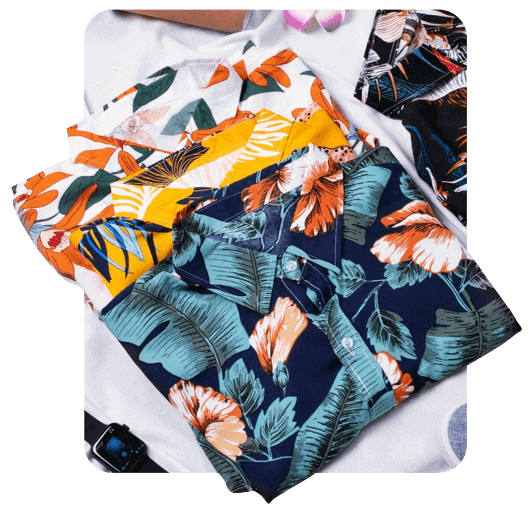
What Is Apparel Fulfillment?
Apparel fulfillment is the storage, picking, packing, and shipping of clothing and accessories on behalf of an ecommerce brand. A dedicated apparel fulfillment company receives inventory by size, color, and style, tracks every variant as its own SKU, and picks, packs, and ships each order, so the brand can focus on design and marketing instead of the warehouse floor.
Where clothing fulfillment gets hard is the SKU math: a single style multiplies into a dozen variants once size and color are counted, and one mispick on that grid becomes a return. Fulfyld’s apparel fulfillment services are built for exactly that, with barcode-verified picking on every size and color, so accuracy holds even as the catalog grows.
From Onboarding to Your First Shipped Order in 3 Steps
Map Your Size and Color Grid
Garment fulfillment starts with knowing which sizes, colors, and styles move fastest, and which need special handling, mapped out on a short onboarding call before a single box ships.
Get Your Line Onto Our Shelves
Your stock lands at our Madison, AL warehouse next, received and logged by size, color, and style code, so fashion fulfillment doesn’t turn into a guessing game once it hits the shelf.
Let Orders Route Themselves
From there, every order routes straight through Fulfyld’s apparel fulfillment center dashboard, tracking size and color down to the SKU level, and nobody on your team is manually re-sorting anything once it’s live.
What Apparel Brands Get With Fulfyld
Fulfyld's apparel fulfillment services are built around a math problem most 3PLs ignore: a single style can multiply into a dozen SKUs once size and color enter the picture.
Dedicated Account Management
Your account manager knows your size run and your fastest-moving colors by name, and flags a packing exception before it turns into a mis-ship.
Size/Color SKU Variant Accuracy
Every size and color is tracked as its own distinct line item and barcode-verified at the pick, so a customer ordering a medium in blue never ends up with a large in black.
Custom, Branded Packaging
Every order can ship in fully customizable packaging, from branded tissue to inserts, with multi-piece outfits and gift sets kitted together before they ship as one unit.
Scalable for Seasonal Drops
Storage and staffing flex for drop-day spikes and seasonal peaks, instead of your fulfillment setup becoming the bottleneck the one week it matters most.
Pick Accuracy That Holds Through a Drop
Fulfyld holds a 99.9% pick accuracy rate sitewide, size and color included, backed by a written SLA with real credits for brands shipping 1,000+ orders a month, so a fast ship date never means the wrong item lands on someone’s doorstep.
Types of Clothing and Apparel Fulfyld Fulfills
From folded knits to structured outerwear, Fulfyld’s apparel fulfillment services handle the full catalog, with each product type stored and packed to the spec it actually needs, not one standard stretched across everything.
What Makes Apparel Different in a Warehouse
A hoodie and a silk blouse can't sit on the same shelf or get packed the same way, and a catalog that turns over every season doesn't behave like a warehouse full of static SKUs. Most fulfillment specs are built for the second case, not the first.
- Fast-turning styles move in and out of active rotation every season, so a warehouse map that's accurate in March can be stale by June.
- Folded vs. hanging garments need different storage and handling, or delicate fabrics arrive wrinkled or stretched out of shape.
- Individually barcoded polybags are how apparel is received and stored, which keeps size and color picking accurate and protects soft goods on the shelf.
- Packaging built for fabric, not just for shipping, keeps a silk blouse from creasing the way a cotton t-shirt can shrug off.
- Multi-piece outfits and gift sets can be kitted together before they ship, so a customer gets one cohesive box instead of three separate ones.
A single apparel fulfillment company handling both folded knits and hanging garments needs a separate spec for each, not one packing standard stretched across the whole catalog.
Fabric care isn't optional, and a warehouse that treats every SKU the same way ends up shipping a wrinkled shirt as often as a wrong size.
Packaging, Prep & Value-Added Services
Beyond pick and pack, Fulfyld handles the prep work that makes apparel ship clean and on-brand, set up during onboarding and folded into your documented packing instructions.
Poly-bagging
Standard poly mailers, bubble mailers, boxes, and void fill are included in the per-order rate. Inbound apparel is received in individually barcoded polybags for accurate picking.
IncludedCustom & branded packaging
Branded tissue, inserts, stickers, and branded mailers or boxes, packed to your documented instructions so every order lands on-brand.
On requestFolding & presentation
Garments folded and finished as a packing step, with tissue, an insert, or a sticker added per your spec for a considered unboxing.
On requestKitting & bundle assembly
Multi-piece outfits, gift sets, and subscription boxes assembled and kitted together before they ship as one unit.
On requestRelabeling & re-tagging
Barcode and hang-tag relabeling handled at $0.40 per label plus an hourly project fee for larger runs.
Add-onFBA prep
Prep and poly-bagging to Amazon FBA requirements for brands running a marketplace channel alongside DTC.
On requestReturns, Restocking, and Seasonal Drops for Fashion Brands
Apparel carries one of the highest return rates of any ecommerce category, and how fast a 3PL inspects and restocks that inventory decides whether it's sellable again or a write-off.
- Returns are where a clothing brand's margin erodes fastest if a 3PL doesn't inspect and restock sellable units the same week they come back.
- Every return gets inspected for damage or wear, then routed back to the right size and color bin instead of a general restock pile.
- A drop's return wave lands weeks after the initial rush, and staffing needs to still be there for it, not just for launch day.
- Size and color inventory counts need to stay accurate in real time, or a drop sells out on paper before it sells out in the warehouse.
Return volume spikes in the two to three weeks after a drop, the same window a brand needs accurate size and color counts for whatever launches next. A 3PL that's slow on either side turns one good launch into a backlog for the next one.
What to Look for in Clothing Fulfillment Companies
Plenty of apparel fulfillment companies will claim they get fashion brands. What shows up in your size-level accuracy reports and your return turnaround once the contract is signed is where that claim actually gets tested.
| What to Check | What You'll Usually Get | What Fulfyld Delivers |
|---|---|---|
| Size/color SKU tracking | Bundled into one generic SKU | Every size and color tracked individually |
| Returns and restocking | Slow, manual inspection | Inspected and rebinned the same week |
| Seasonal volume spikes | Staffing stays flat | Extra hands and shelf space brought in ahead of a known launch |
| Your point of contact | A rotating rep or ticket number | One account manager who knows your account |
| Pricing structure | Add-on fees stacked onto a base rate | A single flat rate, quoted upfront |
If your fulfillment company can't walk an apparel brand through this table without hedging, find that out before launch week, not in the middle of it.
One Warehouse for Every Place You Sell
Few fashion brands run on one channel alone anymore: a storefront here, a wholesale account there, maybe a marketplace listing during a drop. Fulfyld’s direct integrations pull all of it into one system, so nothing has to be manually reconciled at the end of a launch.
That means nobody on your side is reconciling a spreadsheet against a packing slip after the fact. Once every channel reports into the same warehouse floor, clothing fulfillment services stop being something your team has to babysit order by order.
“Excellent partner as we scale. Highly flexible when our volumes fluctuate, transparent pricing, extremely responsive team, super clean Shopify integration. Couldn’t ask for more.”