
Tooth extraction in Chiang Mai
When a tooth cannot be saved, it is removed under local anesthesia, either as a simple extraction or with minor surgery. At Kitcha Dental Clinic, surgical removals are done by dentists with postgraduate training in oral and maxillofacial surgery, and sedation is available for suitable cases.
- Open every day, 09:00–20:00
- Opposite Chiang Mai Gate
- Coordinators in English and Thai
Why a tooth may need to come out
- The tooth is too broken or decayed to be repaired.
- An infection cannot be resolved with root canal treatment.
- Gum disease has made the tooth very loose.
- Your orthodontist needs space for braces, or a baby tooth has not fallen out.
- A wisdom tooth or another impacted tooth is pressing on the tooth next to it.
Your dentist first checks whether the tooth can be saved, and explains the options for replacing it if it has to come out.
Simple or surgical extraction
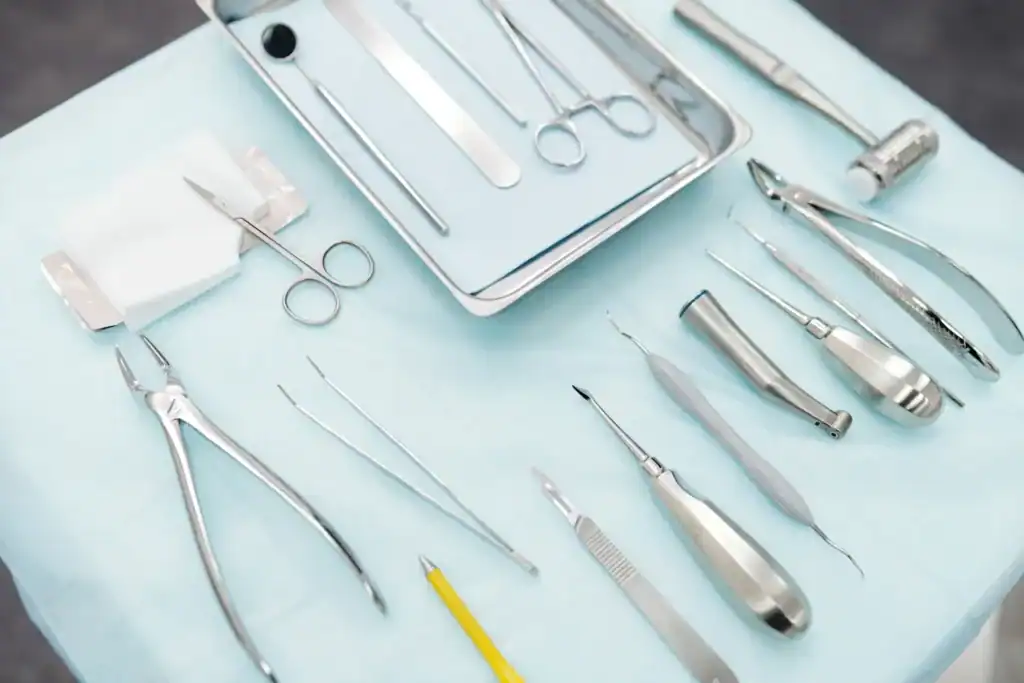
Simple extraction
A tooth that has fully come through the gum is loosened and removed, usually without stitches.
Surgical extraction
For a tooth that is broken at the gum line or has not come through, the gum is opened and the tooth may be sectioned. Stitches are usually needed.
X-rays, and a CBCT scan when needed, show the roots and nearby nerves so the removal can be planned. If you feel anxious, nitrous oxide or oral sedation is available for suitable cases.
Has a tooth been advised for removal?
Send a recent X-ray or photo if you have one. Your dentist explains whether the tooth can be saved, how it would be removed and the options for replacing it.
What happens, and how many visits

Assessment and X-rays
Your medical history and medicines are checked, and X-rays or a CBCT scan are taken. Tell your dentist about any blood thinners or other regular medicines.
Removal
The area is numbed with local anesthesia and checked before starting. You may feel pressure or a rocking movement, but tell your dentist straight away if you feel anything sharp.
Right after
You bite on gauze for 20–30 minutes to help a blood clot form. If sedation was used, you stay at the clinic until you are fully alert.
Check visit
About 7 days later, the healing is checked and any stitches are removed.
Looking after the area
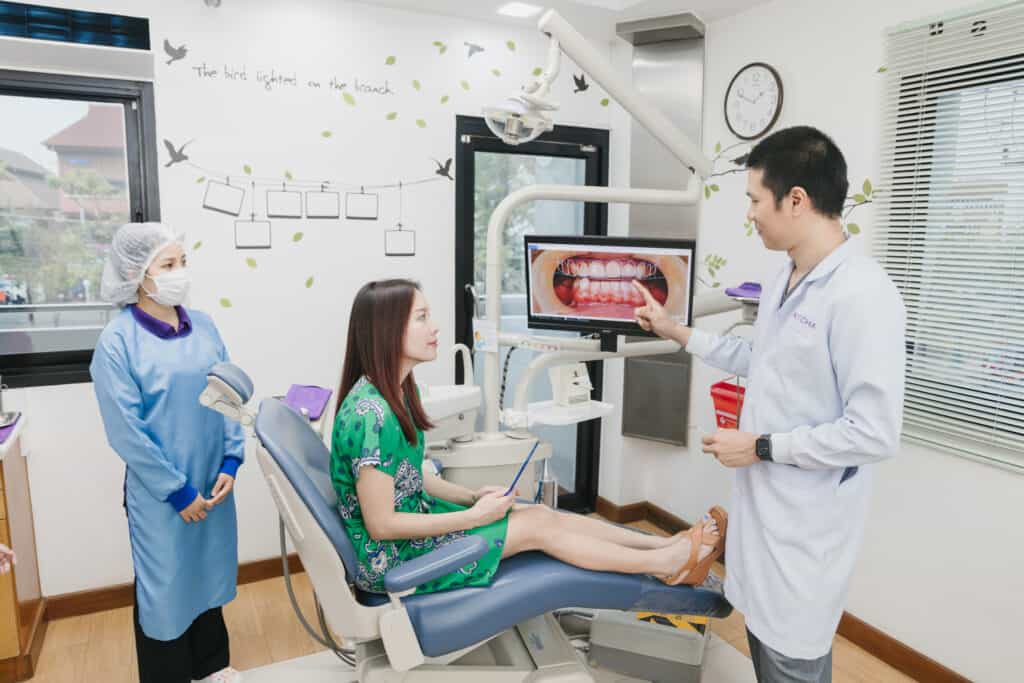
The first day
Some bleeding for up to 24 hours is normal. Do not spit, rinse or use a straw, as this can dislodge the clot. Use an ice pack on and off to reduce swelling, and avoid hot food and alcohol.
The next few days
Eat soft, cool food and chew on the other side. Brush gently, avoiding the area on the first day. Take any medicines as your dentist prescribes; if your dentist prescribes antibiotics, take them as prescribed until the course is finished.
When to contact us
Contact the clinic if bleeding or pain gets worse instead of better, if you have a fever or chills, or if there is increasing swelling, redness or discharge.
Cost of a tooth extraction
Extraction prices depend on how complex the removal is, from a simple extraction to the surgical removal of an impacted tooth, and are listed per tooth on our prices page. X-rays, sedation and medicines are charged separately, only if you need them.
Prices on our prices page are shown as ranges. Your final fee depends on what the examination finds, and may include additional items — such as a rubber dam or special materials — when your treatment needs them. Your dentist explains these before treatment.
Tooth extraction FAQs
Does a tooth extraction hurt?
The area is numbed with local anesthesia, so you should feel pressure rather than sharp pain; tell your dentist if you feel anything sharp. Some soreness is common once the anesthesia wears off, and your dentist advises on pain relief. Nitrous oxide or oral sedation is available for suitable cases if you feel anxious.
How long does the area take to heal?
The gum usually heals in about 2 weeks, while the bone underneath takes about 3–6 months to heal fully. A check visit is usually made about 7 days after the extraction.
Can I fly after a tooth extraction?
Most people can travel 2–3 days after an extraction; your dentist confirms this for your case. Tell us your travel dates when you book so the extraction and the check visit can be planned around them.
Should I replace the tooth after it is removed?
Often, yes, especially for teeth you chew or smile with, because nearby teeth can drift into the gap. Options include an implant, a bridge or a denture; in suitable cases an implant can be placed at the same visit as the extraction.
What is a dry socket?
It is when the blood clot comes out of the socket too early, which can cause increasing pain a few days after the extraction. Avoiding spitting, straws and smoking helps prevent it. If it happens, contact the clinic; it can be treated with a dressing in the socket.
How much does a tooth extraction cost?
It depends on how complex the removal is, from a simple extraction to the surgical removal of an impacted tooth. Prices per tooth are on our prices page, and your dentist confirms the fee after the examination and X-ray.
Book a tooth extraction consultation
Tell us which tooth is the problem and send a recent X-ray if you have one. A coordinator replies in English or Thai and books a time with a dentist. Open every day, 09:00–20:00 (Thailand time).
Or email us at [email protected]
Content reviewed by Dr. Pawak Tungthangthum — DDS, Chiang Mai University; Master's Degree in Esthetic Restorative and Implant Dentistry (International Program), Chulalongkorn University · Last reviewed